
Why Marketers Need Systems Thinking
to Better Understand Martech

As some of you may have heard me say through podcast conversations, I am actually an economist by trade (but never really liked the idea of being an economist as a career). Instead I ended up pursuing marketing and found myself really excited about digital marketing and all it promised back then.
I have also said that, as an economist I like “connecting dots” and “seeing things in systems” and I credit these skills with helping my work with Martech.

But it was Jacqueline Freedman, Head of Advisory of The Martech Weekly and Founder of Monarch Advisors, who put it best when she said that the “best companies I’ve worked at include “Systems Thinking” as part of the annual personal and peer feedback reviews”. I have added her full quote below for your reference. This means helping companies and employees measure how much of the “bigger picture” they see throughout their day-to-day work.

I also heeded her advice and checked the Harvard Business Review article on System Thinking she recommended as “an excellent guide” (and yes, it really is!). After that, I ended up checking out the books Thinking in Systems, by Donella Meadows and The Fifth Discipline Fieldbook: Strategies and Tools for Building a Learning Organization, by Peter Senge et al.
What you will read below is my attempt at using System Thinking principles to help Marketers better understand and support their Marketing Technology (martech) stack, by helping them see marketing technology tools with a “big picture” approach, as part of something larger than just the platforms and marketing activities it supports (and use more of it!). I hope this helps other Marketers out there and, as always, I’m looking forward to hearing your feedback (you can reply to this email and I will read it!)

You are reading The Experimental Marketer Newsletter.
What you get: every week, one martech or AI concept broken down
with real examples, step-by-step walkthroughs, and the career case for why it matters.
Created by a Marketer, for Marketers.
Most marketers have been conditioned to think about martech linearly. A problem occurs, Marketers identify the faulty component that gets fixed or replaced. Email deliverability drops, the ESP is to blame. Lead quality declines, Marketers help scrutinize the CRM. Attribution breaks, so teams evaluate new analytics platforms. This “reductionist” approach works when dealing with simple mechanical systems where components function independently. However, marketing technology doesn’t work that way.
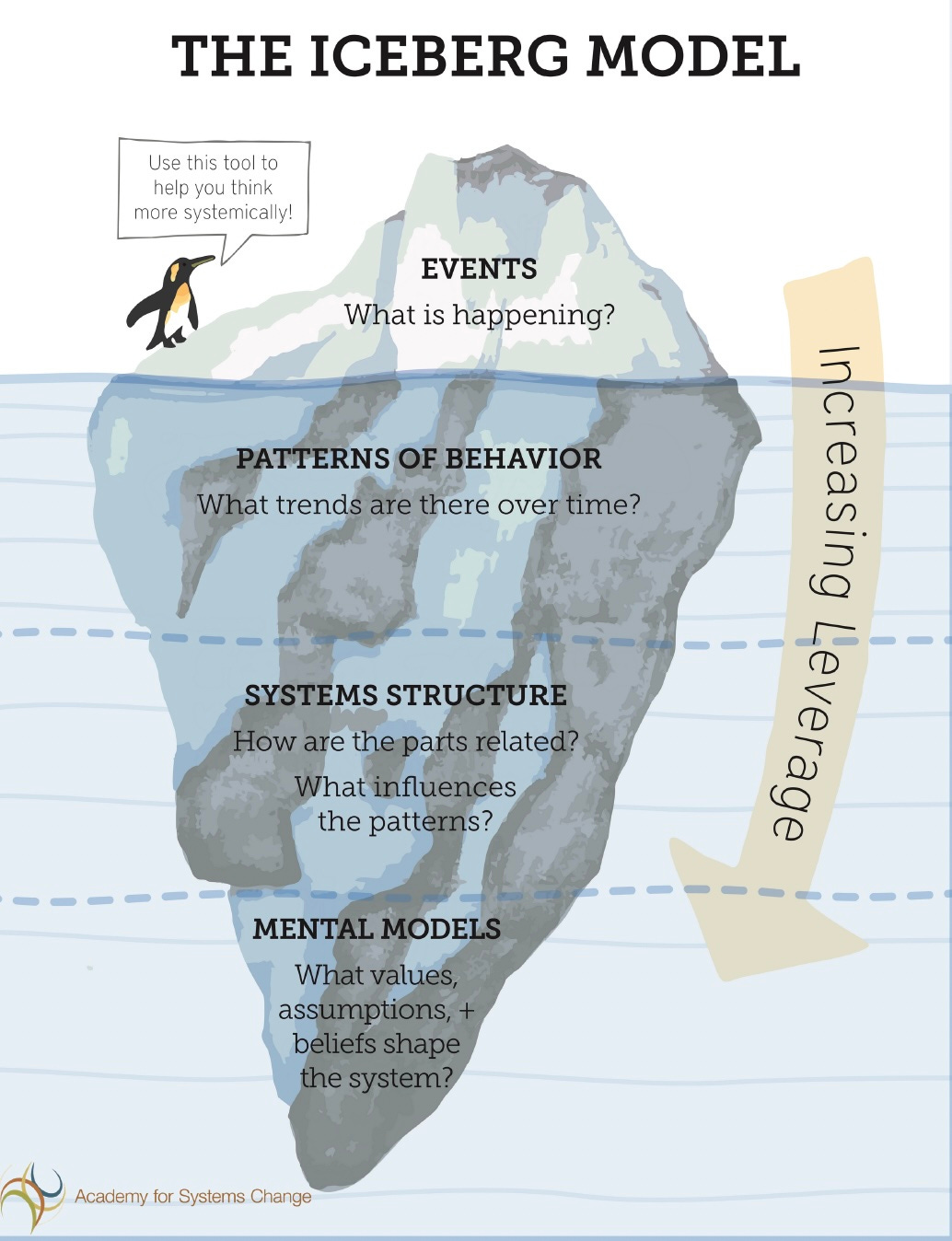
As Donella Meadows observed in “Thinking in Systems,” a system is more than a collection of things. It’s “an interconnected set of elements that is coherently organized in a way that achieves something.” The martech stack is a system where tools, data flows, human processes, and organizational goals interact to produce behaviors that emerge from these interactions rather than from any individual component. Understanding this distinction transforms how Marketers can help approach persistent problems.
Lost in Martech? Check the 6 Core Martech Competencies for Marketers

The System Is Telling You Something
Peter Senge, in “The Fifth Discipline,” emphasized a principle that applies directly to martech struggles: systems largely cause their own behavior. When the martech stack fails repeatedly despite your best efforts to fix individual tools, the system is telling you something. The problem isn’t that the company chose the wrong tools or that the ops team lacks skill. The problem is that the system’s structure creates the behavior you’re experiencing.
Consider what happens when marketing teams address data accessibility issues (an issue that continues to bother Marketers survey after survey). They can identify a specific data gap, someone builds a workaround, and the immediate problem gets solved. But the underlying structure that created the gap remains unchanged. Over time, more gaps appear, more workarounds accumulate, and data accessibility gets progressively worse even as the team invests more resources in solving access problems. This pattern, what Meadows called “shifting the burden,” occurs because the team addresses symptoms while the structural issue generating those symptoms continues operating.
The structure creating these behaviors isn’t just technical, either. It includes how different teams communicate about data needs, how decisions about tool purchases get made, how integrations get prioritized, and what assumptions people hold about how martech should work. These elements interact to create feedback loops that either amplify problems or help resolve them.
The Data Ownership Dilemma: Why CMOs Are Struggling to Execute Strategy
Feedback Loops: Why Small Problems Become Big Ones
Meadows identified feedback loops as the engines that drive system behavior. In martech, these loops operate constantly, often invisibly, shaping how your stack functions over time.
Reinforcing feedback loops amplify change in one direction. For example, when a marketing automation platform lacks proper integration with the CRM, marketers may build manual workarounds. But, these workarounds consume time that could have been spent documenting the integration problem and its business impact. Without this documentation, IT/Ops teams don’t have the information they need to prioritize fixing the integration. The integration remains broken, requiring more workarounds, which consume more time, which prevents proper documentation. The loop reinforces itself, and the problem grows worse rather than better.
Balancing feedback loops work differently. They counteract change and seek equilibrium, often creating unintended constraints. Marketing leadership sets aggressive lead generation targets. The demand gen team scales programs to hit those targets. Lead volume increases, but quality declines because the team prioritizes quantity. Sales complains about lead quality. Marketing ops responds by implementing stricter qualification rules. Fewer leads pass through to sales, but volume drops below targets. Leadership increases pressure for more leads. The cycle continues, with the balancing loop preventing the team from achieving either high volume or high quality because the system structure forces a trade-off between them.
These feedback loops operate whether you recognize them or not. Systems thinking makes them visible so you can work with them rather than against them. Marketers may not be able to reprogram APIs or rebuild data architecture, but they sure can identify and map feedback loops by observing patterns in how problems recur and how attempted solutions create new issues in marketing processes.
Friction Paradox: Why Smart Marketers Embrace Strategic Obstacles in Their Marketing Processes & Technology
Stocks, Flows, and Why Your Data Gets Trapped
Meadows distinguished between stocks and flows in systems. Stocks are accumulations you can see and measure at any point in time, like water in a bathtub. Flows are the rates of change affecting those stocks, like water from the faucet or water draining out. The relationship between stocks and flows determines much of a system’s behavior.
In martech, data is your primary stock and integrations are your flows. Customer data accumulates in the CRM platform (for example). Behavioral data accumulates in the analytics platform. Campaign data accumulates in the marketing automation system. Each tool holds data stocks that should flow between systems based on the company’s business needs.
Integration problems represent flow problems. Data can’t move from where it accumulates to where marketers need it. These flow problems create what appears to be data accessibility issues, but the root cause is structural. Customer data isn’t inaccessible to Marketers because martech tools are poorly designed. It’s inaccessible because the flows between stocks are broken, insufficient, or nonexistent.
Understanding this distinction changes how you think about solutions. You can’t solve a flow problem by accumulating more data. You can’t solve it by buying tools with bigger stocks. You solve it by fixing the flows, which requires understanding what data needs to move, how quickly it needs to move, where it needs to go, and what transformations it needs to undergo during the journey.
Marketers understand these flows both from the user, as well as from the marketing process perspectives, they know what data is needed from which tools to accomplish specific tasks. They know where flows break because they experience the breakage every day when they can’t access data they need or when data arrives too late to be useful. This knowledge is critical to fixing flow problems, but it only becomes useful when Marketers can articulate it in ways that help technical teams understand what needs to change.
7 Essential Skills for Marketing Professionals Supporting CMOs in the MarTech Maze
Delays: The Hidden Structure Creating Chaos
Meadows identified delays as critical determinants of system behavior and common causes of oscillations. In martech, delays between cause and effect obscure the relationship between them, making problems seem mysterious when they’re actually predictable consequences of system structure.
For example, the company implemented a new lead scoring model today. The immediate effects are obvious: leads receive different scores, and sales prioritizes leads differently. The less obvious effects emerge over weeks and months. Marketers optimize campaigns for the new scoring criteria, sometimes in ways that game the system rather than finding genuinely better prospects. Sales adjusts behavior based on which scored leads actually convert, developing new heuristics that may conflict with the scoring model. Data quality shifts as fields that influence scores receive more attention while other fields get neglected. By the time these delayed effects fully materialize, nobody connects them back to the scoring model change that initiated the cascade.
These delays create a specific pattern in martech stacks, as teams implement changes, see immediate positive results, declare success, and move on to the next problem. The delayed negative consequences emerge later, get attributed to different causes, and generate new solutions that create their own delayed consequences. The system oscillates between different states without ever stabilizing because delayed feedback prevents teams from seeing the actual dynamics at work.
Recognition of delays doesn’t require technical expertise. It requires patience, longitudinal observation, and willingness to consider that today’s problems might stem from last month’s solutions. Marketers are particularly well-positioned to observe these patterns because you work with the tools daily and experience both immediate and delayed effects of changes.
Mental Models: Why Everyone Sees the Same Stack Differently
Senge emphasized that mental models, the assumptions and images we hold about how the world works, shape what we see and how we interpret it. In martech, different stakeholders hold radically different mental models about what the stack should do and how it should function.
Marketing ops might see the martech stack as a technical system that needs to maintain data integrity, ensure reliable integrations, and minimize security risks. Their mental model prioritizes stability, standardization, and control. Demand gen marketers might see the same stack as a campaign execution engine that needs to be fast, flexible, and capable of supporting experimental approaches. Their mental model prioritizes speed, capability, and creative freedom. Leadership might see it as a cost center that needs to demonstrate ROI and operate efficiently. Their mental model prioritizes metrics, consolidation, and optimization.
These different mental models lead to conflicts that seem like disagreements about tools or priorities but are actually conflicts between different ways of understanding what the system is for. Ops resists rapid tool additions because their mental model highlights integration debt and security risks. Marketers push for new capabilities because their mental model highlights competitive advantage and campaign effectiveness. Neither perspective is wrong, but without surfacing these mental models and finding shared understanding, the conflicts persist regardless of which tools the company buys or how much it invests in integration.
Marketers can contribute to resolving these conflicts by making their mental models explicit. When they explain not just what tool they want but why they think the martech stack should support certain capabilities, they reveal the assumptions shaping their requests. When ops explains their hesitation about a new integration, they reveal the risks and trade-offs in their mental model. This explicit discussion creates space for negotiation and shared understanding that lets companies design systems serving multiple valid purposes rather than systems optimized for one mental model at the expense of others.
System Purpose: What Your Stack Actually Optimizes For
Meadows noted that a system’s function or purpose is often its least obvious yet most crucial characteristic. If you ask ten people what your martech stack’s purpose is, you’ll likely get ten different answers. This lack of shared purpose means the system can’t coherently organize to achieve anything specific.
Some martech stacks optimize for minimizing vendor costs. Tools get selected based on price, consolidation becomes a primary goal, and integration decisions prioritize reducing the number of platforms. Other stacks optimize for best-of-breed capabilities. Each function gets its own specialized tool, integration complexity grows, but each team has exactly the tools they prefer. Still others optimize for data centralization, using a CDP or data warehouse as the hub and evaluating all tools based on how well they integrate with that hub.
None of these purposes is inherently right or wrong, but the stack’s structure should align with its purpose. A stack that claims to optimize for best-of-breed capabilities but lacks the integration infrastructure to connect those tools hasn’t aligned structure with purpose. A stack that aims to centralize data but allows teams to independently adopt tools that don’t integrate with the central hub has the same misalignment.
Persistent integration and data accessibility problems suggest many martech stacks have implicit purposes that conflict with their explicit purposes. Organizations claim they want integrated stacks that make data accessible, but their actual decisions optimize for other goals like minimizing upfront costs, avoiding difficult conversations about consolidation, or letting each team independently optimize their tooling. The system’s behavior reflects its actual purpose, not its stated purpose.
Marketers can help identify this misalignment by observing what the stack actually optimizes for based on how decisions get made, which problems get prioritized, and which trade-offs prove acceptable. This observation doesn’t require technical knowledge. It requires paying attention to patterns over time and being willing to surface uncomfortable truths about what the system really values versus what everyone says it should value.
Resilience: Why Robust Martech Stacks Aren’t Rigid Ones
Meadows emphasized resilience, a system’s ability to bounce back from disturbances while maintaining core functions. In martech, resilience means your marketing programs can continue operating even when individual tools fail, integrations break, or key team members leave.
Most martech stacks may optimize for efficiency rather than resilience. Every process gets streamlined, every redundancy gets eliminated, and every tool gets pushed to maximum utilization. This approach works until something breaks, and then the entire system becomes fragile because there’s no slack to absorb the disruption.
Resilient martech stacks include buffers, backup processes, and distributed knowledge. Critical data flows through multiple paths rather than depending on single integrations. Important processes get documented so they don’t exist only in one person’s head. Tools maintain some excess capacity so temporary spikes in usage don’t cause failures. This resilience may cost more than a maximally efficient system, but it functions reliably over time while brittle systems may oscillate between smooth operation and crisis.
Building resilience doesn’t require technical expertise from marketers. It requires recognizing where single points of failure exist, documenting how critical processes work, cross-training team members so knowledge is distributed, and advocating for maintaining some slack in the system rather than optimizing every resource to maximum utilization. These are organizational and process interventions that marketers can drive.

Moving from Linear to Systems Thinking
The transition from linear thinking to systems thinking about martech doesn’t happen instantly. It requires practicing new ways of observing, questioning assumptions, and recognizing patterns. But this transition is accessible to marketers because it’s fundamentally about seeing relationships and dynamics rather than understanding technical implementation.
Systems thinking helps marketers move from asking “which tool is broken?” to asking “what behavior is this system producing and what structure creates that behavior?” It shifts focus from finding someone to blame to understanding the feedback loops that generate problems. It replaces the hunt for perfect tools with recognition that system behavior emerges from relationships between imperfect components.
Integration and data accessibility challenges persist across the industry because organizations keep trying to solve these problems just by buying better tools. The problems persist because they’re system behaviors, not tool failures. Better integration platforms and more sophisticated platforms may help, but they don’t address the feedback loops, delays, misaligned mental models, and structural issues that create the behaviors teams are trying to change.
Meadows observed that “we can’t impose our will on a system. We can listen to what the system tells us, and discover how its properties and our values can work together to bring forth something much better than could ever be produced by our will alone.” I now believe this wisdom applies to martech struggles as well. Marketers can’t force their stack to work through sheer will or by fighting against its natural behavior. Instead, they need to understand how it actually functions as a system, identify the structural issues creating undesired behaviors, and work with ops and leadership to modify that structure.
Marketers bring essential perspective to this work. They experience how the system actually behaves, see which feedback loops are broken, where delays create problems, and what the system’s actual purpose seems to be based on observed behavior. They understand the mental models shaping different stakeholders’ priorities and can help make those models explicit. They also know which resilience factors matter most for marketing activities and its operations.
The Marketer’s perspective is critical because the technical teams supporting martech need to understand how marketing’s systems function in practice to build systems that work well for Marketers. The integration and data accessibility problems persisting across stacks won’t be solved by better technology alone. They’ll be solved when technical and non-technical stakeholders partner to understand their martech stacks as systems and design structural interventions that change system behavior rather than just treating symptoms.
The system is already telling you what needs to change. Systems thinking gives you the framework to hear what it’s saying.
Sources
The Martech Weekly newsletter #248 - Marketers can’t automate processes that they can’t design
Meadows, Donella H. Thinking in Systems: A Primer. Chelsea Green Publishing, 2008.
Senge, Peter M., Art Kleiner, Charlotte Roberts, Richard B. Ross, and Bryan J. Smith. The Fifth Discipline Fieldbook: Strategies and Tools for Building a Learning Organization. Crown Business, 1994.